Showing posts with label Fall and winter garden. Show all posts

Sunday, July 11, 2010

Our Second Spring!

I learned in a Seattle Tilth class last year that July is our second spring. That means that now is the time to start planting your fall and winter garden. I use the Seattle Tilth Maritime Northwest Garden Guide for direction and make sure I buy seeds for overwintering plants or plants that are meant to be planted for the fall. A lot of times the varieties will be slow-bolting, which means the seedlings hold out for our cool, fall weather longer than varieties we'd plant in the spring that would quickly go to seed in our hot summer weather.

The key is to keep that seed bed moist – you don't want the soil to dry out before your seeds germinate. One way you can do that is by draping some floating row cover over the seed bed. It is a special type of agricultural fabric that is designed to let light and rain water in, while keeping a lot of pests out. You want to drape it loosely on the seed bed with some slack, so when the seedlings start growing, the fabric will move and "grow" with them. Just remember to keep it watered under there!

This month, you can plant:

Overwintering Carrots

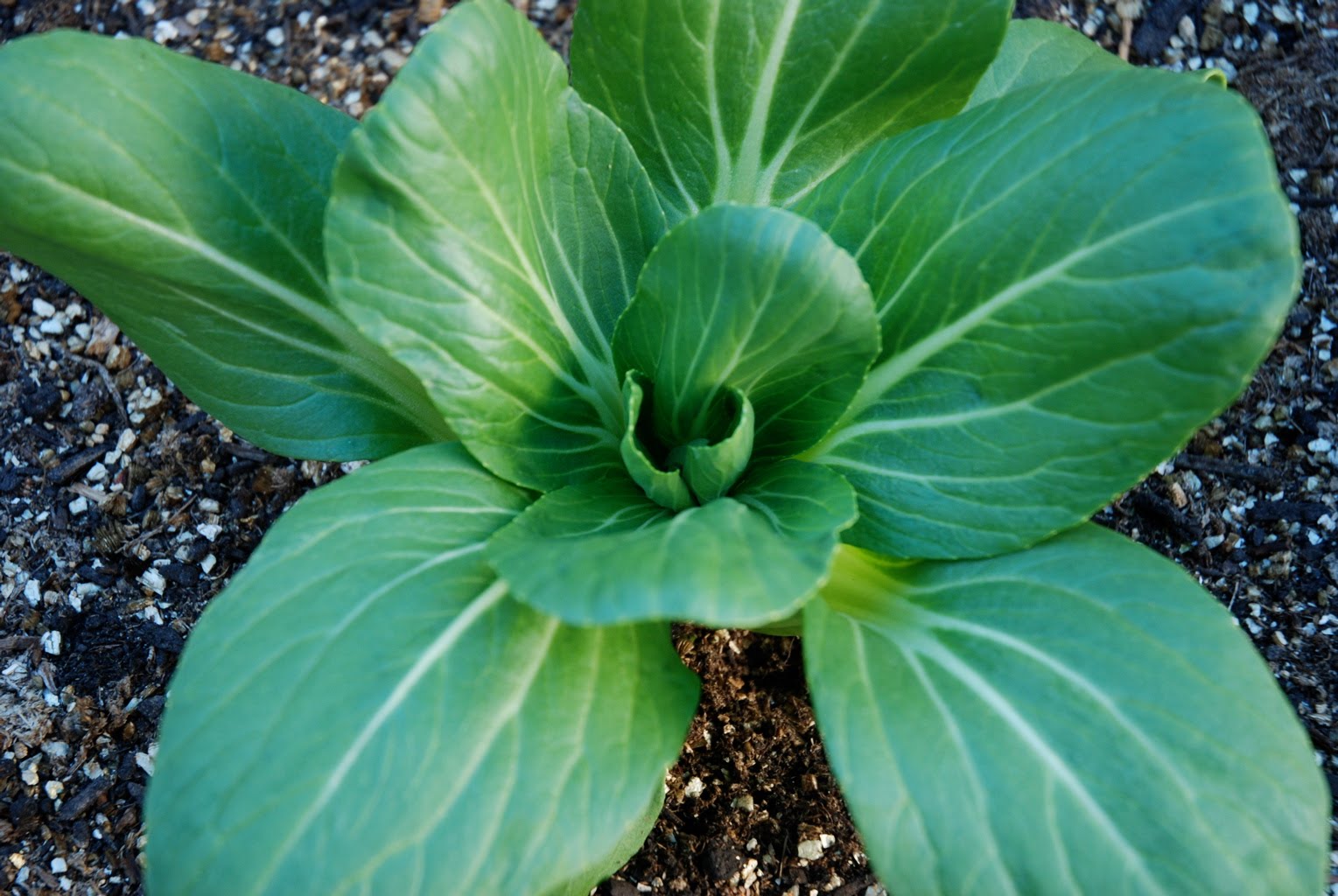
Oriental Greens, like Pac Choi

Broccoli, Cauliflower, and Cabbage

Swiss Chard and Kale

Snap and Snow Peas

In late July and August, plant:

Spinach and Lettuce

For a complete listing of all the delicious vegetables you can grow during the fall and winter, check out the Maritime Northwest Garden Guide. On my Pacific northwest urban farm, it's indispensable.

Saturday, January 9, 2010

Surprises in my Winter Garden

This afternoon, when the alluring northwest sun graced us with an amazing sun break, was the most calm few hours I've had since the whirlwind of the holidays and international travel came to an end. I've been away from my garden for the past few weeks, but today we got reacquainted and despite what I thought, my garden was far from asleep. Of course, that was the original plan. I started planting my fall and winter garden in July with the intention of harvesting vegetables year-round. But that was when I was still in the carefree time known as elementary school teacher summer vacation. Once September came around, I got swept up into the hectic life of work again and rarely made it out to the yard, except to harvest some kale and lettuce a few times a week. Our amazing year-round farmers' market has been my best friend – providing me with delicious, local greens, while saving me on energy when I need it the most. Not only that, when it's cold, rainy, and not to mention dark by the time I get home, I have no desire to be outside. And then, after our out-of-character-for-the-northwest cold snap pretty much wiped out all of my delicate little fall greens, I lost my momentum even more.


So today, when I went back out to the yard to take stock of what was still hanging around, I was delighted with what I found. Huge rutabagas, bulging out of the ground. I've never grown rutabagas before so I'm not sure if that's what they're supposed to look like, but regardless, I was thrilled. I learned during my Seattle Tilth Winter Gardening class that rutabagas are one of the most reliable winter vegetables because they keep so well in the cold ground. I haven't pulled any yet to taste them, but I'm pretty happy with what I can see.


I discovered that my collard greens had survived the cold. They were still as green and as ruffled as could be.


I found my dinosaur kale even healthier than it was in the summer and think I'm on to something. I noticed that during the summer, the bugs were getting to eat more of the kale than I was. But now, during the cold weather season it likes the most, my kale leaves look beautiful and intact. And I think the bugs that were thriving in the summer might have packed their bags and left for the winter. It's amazing, my little ecosystem out back.


I learned that the Territorial Seed Company writes pretty accurate descriptions. Surprisingly, their Wintewunder and Arctic King lettuce varieties survived the huge winter frost. I thought I had lost them all, but was delighted to find these hardy winter lettuces happily tucked inside the cloche.

And when I brushed away some of the soil around the greens growing out of my carrot plot, I was happy to discover bright orange peeking out at me. I pulled a beautiful Autumn King winter carrot out to add to our dinner tonight. While I was no where to be found, my garden was taking care of itself.

Today was also the first day of my Master Gardener program. I was lucky to be accepted, along with 75 other enthusiastic gardeners, to be trained in sustainable and effective garden practices so that I can volunteer in the community. I will be attending Master Gardener classes every Saturday for the next three months. Imagine my delight when I got my January syllabus with course titles such as Botany, Orchard Mason Bees, Roses and Ornamentals, and Organic Gardening for the Home Gardener.

So, I've decided that every week, after I've read my chapters and done my quizzes, after I've attended my classes, diligently scribbling notes into my new binder, I will post the big lessons I came away with that week. Consider this a work in progress – my journey to a deeper understanding of the garden I love so much.

Garden Gem (what I learned from week one of Master Gardener school):
Soil is the basis for everything we do in the garden. It provides our plants with some pretty critical elements: nutrients, water, air, and physical support. I also learned that nitrogen is the nutrient most needed by plants and it's the nutrient that promotes leafy growth. It's also the first number you'll see on a fertilizer label. Finally, I learned that the nutrients in the soil that plants need are not in a form that are readily available for plants (i.e. in their soluble form) until nutrients that come from the minerals in the soil are weathered or until organic matter in the soil is broken down and nutrients are released by helpful organisms like bacteria, fungi, and insects. I learned a long time ago that it was a sign of healthy soil to see earthworms squirming around in it, but now I understand that that's because they are helping my plants access the nutrients they need.

Saturday, December 12, 2009

Winter Wonders

A few weeks ago, Willi Galloway of DigginFood posted a picture of a beautiful head of red kale covered in frost. Then last week, temperatures dipped well below freezing in our good ol' rainy city and I woke up to find my kale in a similar state.
I have two raised beds still going strong right now in my winter garden. All my delicate varieties of lettuce are tucked into a bed covered by a cloche. When I checked on those, there was nary a frosty leaf in sight. The kale and frosty collards are in the bed of hardy greens, exposed to the elements. It's been a lot colder than I predicted it would be this time of year, so we'll see how long those little plants grow.
Jake and I both agreed that my sweet little pea blossoms looked pretty sad. I planted this crop of peas during our region's "second spring" in July and have been munching on sweet sugar snap peas since September. I'm afraid to say though, that after this cold snap, they may have met their end.
When the cold weather sets in, I start cooking and thanks to all the amazing food blogs I follow, I've had plenty of inspiration. The first recipe I tried, which I highly recommend, is Butternut Squash Salad with Cider Dressing from Sprouted Kitchen. If you follow my blog, you know about my love affair with butternut squash, so I won't try and sell it again. I will say though, that this is a different take on squash. It isn't pureed or served in soup, but rather is featured as a topping on a nice winter salad. Jake and I omitted the pomegrantes to keep it local and used a kale variety from the farmers' market for the greens since kale is abundant at the market in the winter. We also toasted pumpkin seeds in the skillet and tossed them into the salad instead of the pistachios.
I used these beautiful, local cranberries that I found at the farmers' market to make Gingerbread Tart with Cranberry Curd from the blog Not Without Salt. It looks pretty intricate, but it's really just three basic steps: making the gingerbread tart crust, making the cranberry curd filling, and making meringue to put on top.

I do have a couple of notes about the experience. The cookie crust was delicious, but really hard to roll out because it was so sticky. And when she says roll it out really thin, roll it out really thin. It puffs up a bit when it bakes, so my crust was pretty thick.

Also, be careful with the meringue. It says you should watch it carefully when it's broiling and that's the truth - it turns from snow white to golden brown (almost burning) in less than a minute. A few seconds of multitasking could result in a burnt topping.

Finally, I leave you with one more winter gem. I don't have any pictures of this, but you have to trust me when I say the recipe for Vanilla Roasted Pears from Smitten Kitchen is amazingly delicious and super simple. I took this dish to a girly dinner party last night and we devoured every bit of the sweet, caramel goodness. It only cost me $4 to buy everything I needed - local, organic pears, a lemon, and a vanilla bean and I was able to prep it in under a half hour. I put it in the oven when while we were eating so the pears would be warm. I served them with a few homemade gingerbread cookies and was thinking I probably should have served it with ice cream as well. But to be honest, it really didn't need it. This simple dessert is a wonder on it's own.

Sunday, October 11, 2009

My fall garden

A few months ago, I started planning my winter garden. This was a first for me. I usually garden from April to August and then clean everything up for the winter. Now I know that lots of vegetables can be grown and harvested throughout the winter. Being the type A planner that I am, I mapped my fall and winter garden out in my garden journal before I planted everything. Jake thought this was hilarious, but it was necessary, I swear. For one thing, I had to plant some plants in a bed that would be protected by a cloche (the lettuce, spinach, and fennel). Not only that, some seeds needed to be planted in late July and others in August and October.
Another bed in my fall garden contains hardier vegetables that don't need to be protected with a cloche. I planted peas (which will just last through the fall), rutabagas (which store great in the cold ground), overwintering onions, collard greens, and kale.
On another note, I was finally able to harvest my winter squash. I didn't get as many as I hoped, but this was the first summer I've ever grown winter squash and I'm grateful for every one of them that actually grew. I ended up with four of the largest delicata squash I've ever seen (delicate they are not) and three large butternut squash.
Those of you that follow my blog know about my love for butternut squash. It was the best to crack open my own homegrown beauty for dinner on Saturday night.
I hate to admit it, but when I was cutting it open, I was halfway nervous that it wouldn't be the beautiful, firm squash I hoped it would be. However, I was delighted to discover that is was almost solid "meat" - just a little hole of seeds to scoop out. I peeled it and cut it into little cubes, which yielded about 8 cups of squash. I used five cups of it in a yummy recipe for Roasted Squash and Black Bean Tacos from Diggin Food. I served it with homemade corn tortillas, fried green heirloom tomatoes and chocolate cherry tomato salsa.
The chocolate cherry tomatoes deserve a special tribute. These are from the two plants I started from seed in February and raised indoors. In June, hundreds of little green tomatoes appeared all over the plants and from then on, about two or three pounds ripened each week. It is the most amazing harvest I could have imagined. I don't know if this is normal for cherry tomatoes, but just enough ripened each week for us to comfortably eat and share. I am still harvesting cherry tomatoes from these plants. Last week, I harvested a whopping four pounds. For the past four weeks, I've been bringing in pounds of cherry tomatoes to my staff lounge – they're inevitably devoured by noon. These tomatoes are so sweet and delicious, Jake says I've ruined him for tomatoes. If you've ever thought of growing tomatoes, try planting a few of these. You won't be disappointed.

Wednesday, August 5, 2009

My Fall and Winter Garden

I started the day by planting my fall and winter garden, filling up all those seemingly empty squares in the photo above. In late July, I started planting seeds of plants that I will be able to harvest in the fall and throughout the winter. I ordered a bunch of hardy, over-wintering seeds from Territorial Seed Company's Winter Garden catalog. According to Seattle Tilth, July is the second spring in our climate, so it's a good time to plant cool weather crops again, like lettuce and peas. The following crops will hopefully be growing in my garden this fall:
  • lacinato kale (dinosaur kale) and red kale
  • collards
  • boy choy
  • swiss chard
  • 3 types of bibb lettuce
  • romaine lettuce
  • red merlot lettuce
  • onions
  • rutabagas
  • 2 types of spinach
  • 6 buckets of carrots

Then, I got out the ladder and precariously gathered all of the apples I could reach off my tree. I have no idea what kind of apples they are, except that they look like little crab apples. They're small and tart, but they bake beautifully. Last night, I made a rustic apple tart with another Mark Bittman recipe. I'm telling you, that cookbook of his is worth checking out. 


Finally, I harvested the seeds out of one of my ripe heirloom tomatoes this afternoon. I'm going to take the seeds through a fermenting process that will allow me to store them until I am ready to plant them in February. Thank you Gayla Trail (the author of the book that got me started, You Grow Girl) for showing me the way.